

Secondaries: The Market That Doesn’t Exist. Yet.
A panel report from the London Venture Capital Network Summit — London, Guildhall, 15 May 2026

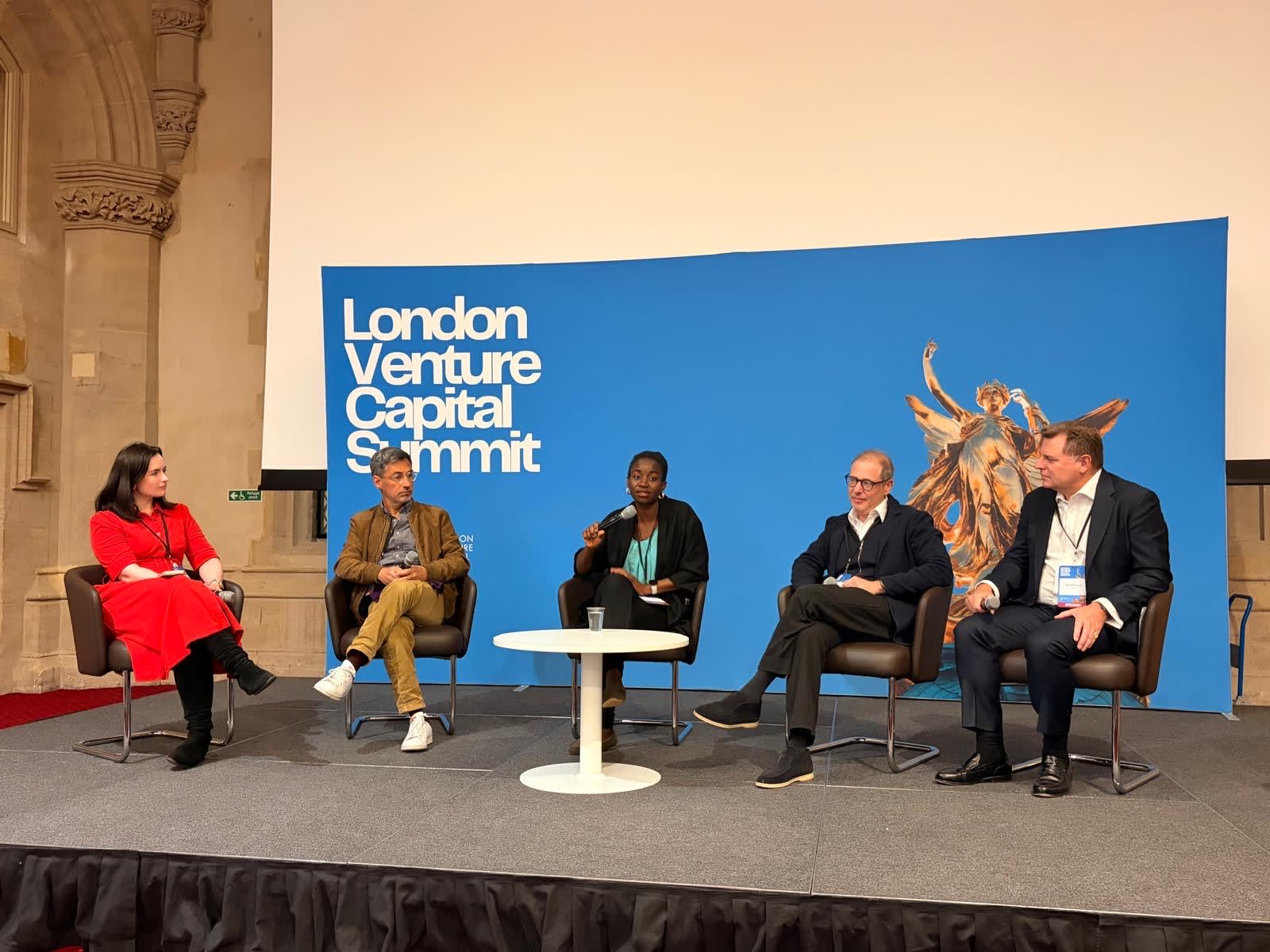
The fact that secondaries got a main-stage slot at Europe’s flagship venture capital summit tells you something. Six hundred investors, sixty family offices, eight hundred founders — the London VC Summit at Guildhall is not a niche gathering. A panel on venture secondaries at midday in the Livery Hall is a signal of where the asset class now sits in the institutional conversation. Five years ago, it would have been a side event.
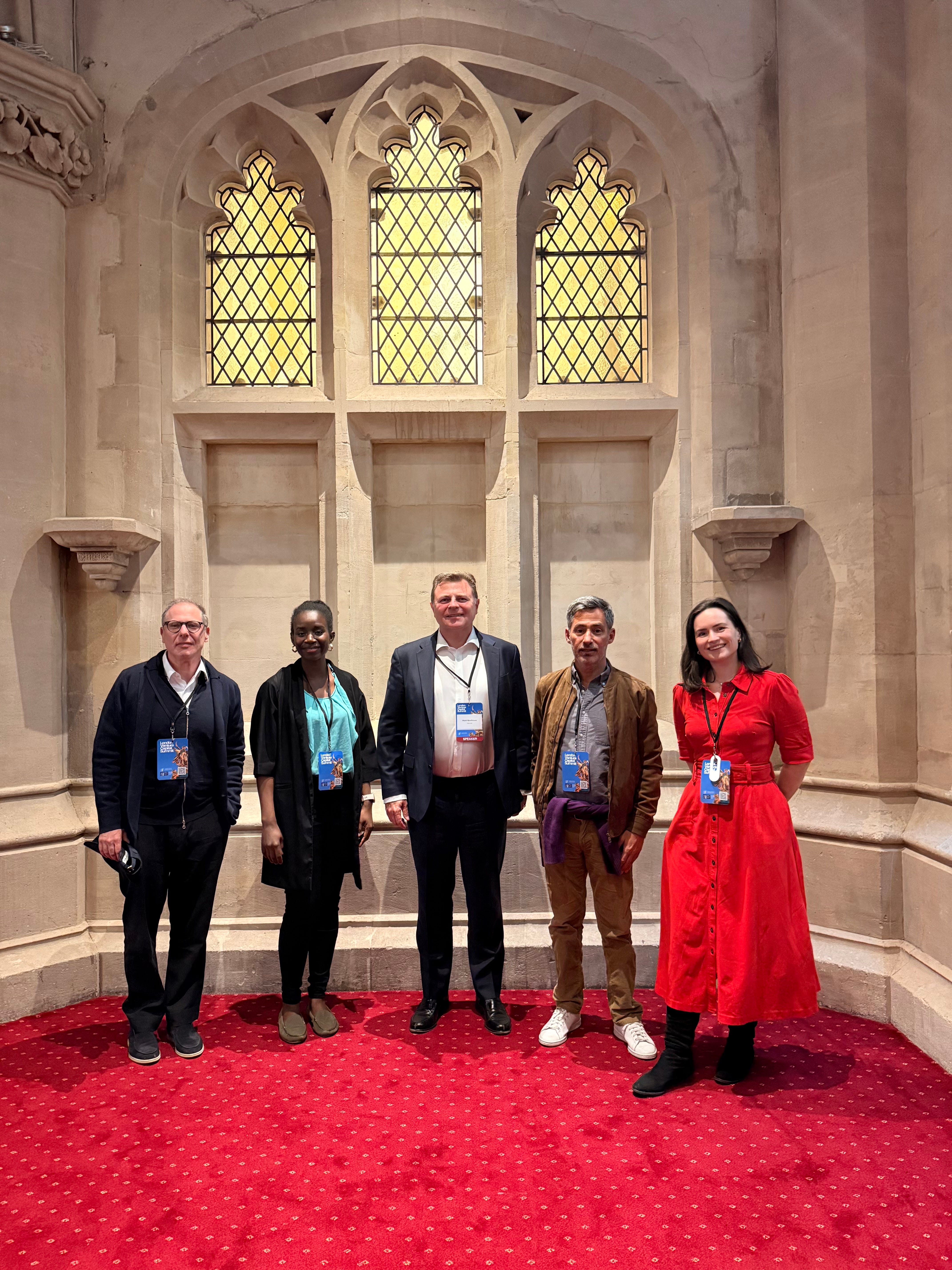
Florence Bavanandan moderated. She is a partner at Launch Africa Ventures and runs secondary mandates for both the Botswana Tech Fund and Launch Africa’s broader liquidity strategy — which means she came to the session not as a neutral chair but as a practitioner with skin in the game. The four panellists covered the market from genuinely different positions.
Omolade Adebisi leads the secondary strategy at Isomer Capital, Europe’s most active institutional fund-of-funds, with over 100 funds and 60 unicorns in the portfolio. She spent a decade in private equity secondaries before moving to venture — a comparative frame that ran through everything she said. Alan Vaksman, is managing partner at Launchbay Capital, a direct secondary fund approaching $500 million in AUM that buys exclusively employee, founder, and angel shares across Europe and the US. No fund stakes, no GP-leds — pure direct. mark woolhouse founded Treble Peak, a platform working with VC funds on primary and secondary access within pooled investor structures, with the ability to provide liquidity within those pools directly. And myself — I advise GPs and LPs on complex secondary situations, invest in late-stage growth assets outside the well-known names, and founded Secondary Network, a practitioner network of 240-plus professionals active in the space. I also write about Venture Secondaries, which is why this report exists.
The headline numbers and the daily reality of most venture practitioners describe two different markets. The panel spent forty minutes on the gap between them.
The secondary market for private equity is a success story by every available measure. Jefferies reports $240 billion in total secondary volume for 2025, up 48% year-on-year. Lazard puts it at $233 billion. Evercore at $226 billion. The differences are methodological. The direction is the same. The market has grown at roughly 20% CAGR since 2012, when total volume was $20 billion. It is now core infrastructure for institutional capital allocation, not a niche liquidity mechanism.
Venture secondaries sit inside that headline number. They do not explain it.
The PE secondary market — buyout LP stakes, continuation vehicles, the domain of Ardian, HarbourVest, LGT, Lexington, Coller — accounts for the structural majority of that $230-plus billion. It is a market of roughly 200 active buyers, of whom the top 10 account for around 60% of volume. It is concentrated, relationship-driven, and entirely focused on the best assets available. If you are deploying at that scale, you are buying the best of what private markets produce.
Venture secondary volume is now approaching a comparable scale — nominally. The reality beneath that number is where the panel’s argument began.
The opening question was structural: cyclical response to a liquidity drought, or permanent feature of the asset class? The panel’s answer was unanimous. The reasoning is worth unpacking.
Omolade opened with a historical frame that grounded the rest of the session.
The venture secondary market is today where private equity buyout secondaries were thirty to forty years ago. In the 1990s, when PE secondaries were finding their footing, an LP who wanted to sell a fund stake had to go to the GP first. The GP’s reaction was anxiety — a selling LP meant a broken relationship, a vote of no confidence, an early exit from a ten-year marriage. That stigma defined the market for years. It is now completely gone from buyout. Active secondary trading in PE funds is priced quarterly on platforms. “We’re not there yet in venture — but we will get there.”
GP-LP dynamics have shifted at three levels simultaneously. Founders with nine-figure paper valuations and no liquidity. GPs under sustained DPI pressure from institutional LPs who have stopped treating fund life extensions as acceptable. And LPs themselves, who two years ago needed persuading that selling a fund stake was not an admission of failure, and who now initiate the conversation themselves. “Two years ago, I spent a lot of time convincing LPs this was something they could do. Now they call me.”
Alan added the workforce dimension.
Tender offers for employees have become a talent retention mechanism, particularly in AI. The ability to offer liquidity to engineers is functioning as deferred compensation at a moment when cash salary competition with large technology companies is structurally unwinnable for most startups. That driver is not cyclical. And the stigma that once attached to employee secondary sales — the idea that selling shares signalled a lack of conviction — has largely disappeared in the US. In Europe, it is going. “The market is getting there.”
Mark brought the LP perspective.
Distributions made in the last five years are roughly half the capital called over the same period. That is not just a founder and employee problem. It is an institutional investor problem. The LP base that has spent a decade being told to be patient is running out of patience — and the secondary market is the mechanism through which that impatience is expressed. More importantly, he argued, the framing needs to change entirely. “You look at your public portfolio — it is normal to rebalance it regularly. Why shouldn’t you do the same with your private portfolio?” The secondary market is not a distress mechanism. It is portfolio management. The normalisation of that framing is still incomplete, but it is happening.
The structural argument is about architecture. Private markets spent twenty years building the investment side — funds, SPVs, co-investment vehicles, crowdfunding, every conceivable mechanism for deploying capital into private companies. Nobody built the exit side with equivalent energy. The secondary market exists because the primary market forgot to build a door. That is not a temporary condition. It is a design flaw that the secondary market is now permanently in the business of correcting.
Then the number that reframes everything.
Venture secondary volume is approaching $200 billion annually. According to Hiive data cited in PitchBook’s Q1 2026 report, the top 20 names account for 81% of that trading value. The top five — OpenAI, SpaceX, Databricks, Anthropic, and Stripe — account for the majority of transaction volume. The power law that governs venture outcomes governs venture secondary liquidity with the same force.
“80%, 90% of that market is finite. You know the usual suspects — the Databricks, the SpaceXs, the OpenAIs, the Anthropics.” The rest of the market is in a full drought. An average GP — including a genuinely good GP in Europe or the US without one of those names in portfolio — is not accessing the secondary market in any meaningful sense. Some LP stake movement, perhaps. Selling portfolio positions into a functioning market: largely not happening.
I said it plainly on the panel.
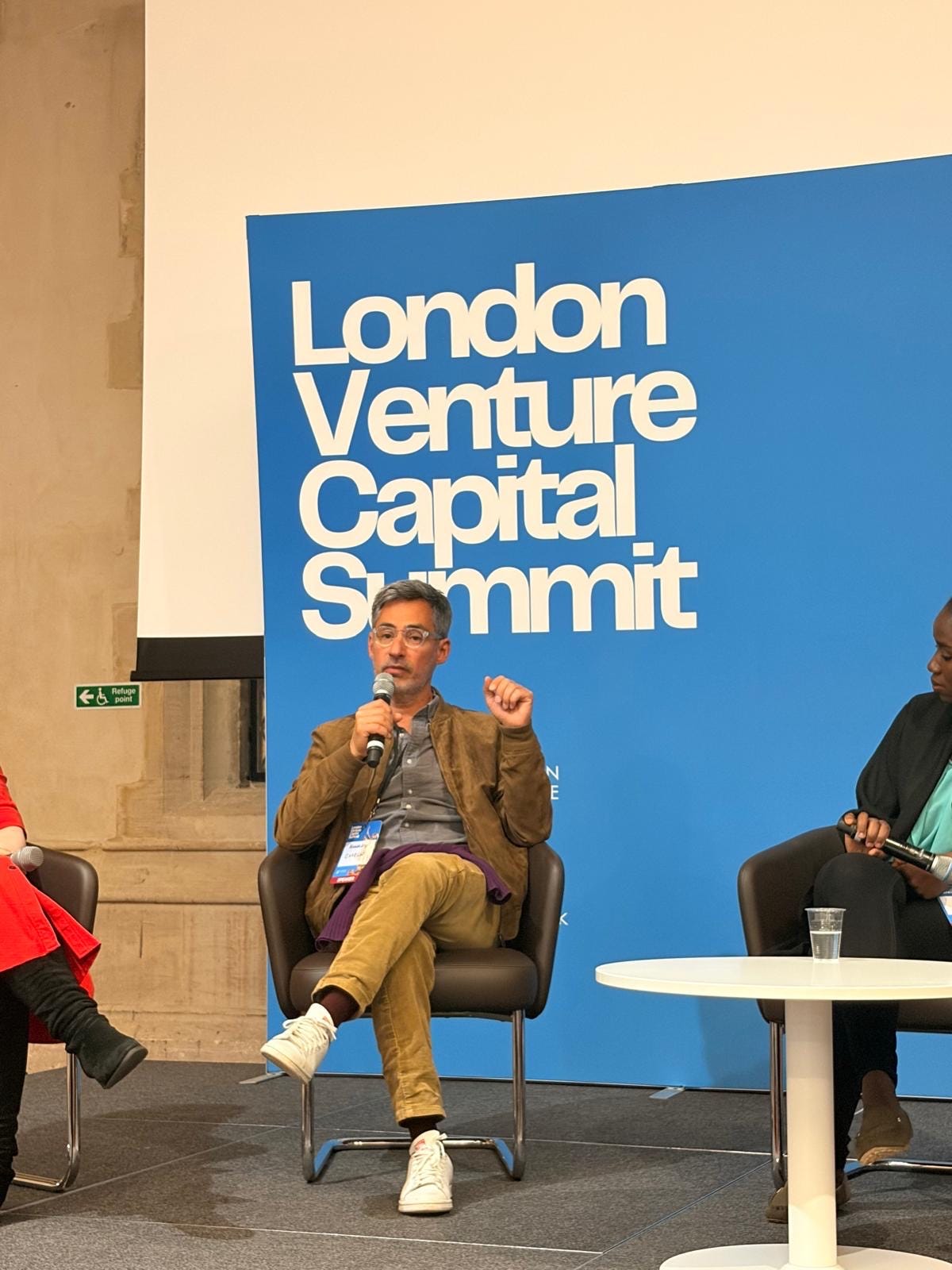
My take? For most of the venture industry, the venture secondary market does not exist.
Not as a functioning liquidity mechanism. Not as something you can rely on to solve a DPI problem, manage a founder’s paper wealth, or provide an exit path for a 2019 vintage fund with no AI exposure. The market exists for twenty names. For everything else, the drought continues.
Alan’s intervention on misconceptions sharpened the point from a different angle.
The reflex question at every secondary panel — what is the average discount? — is a category error. The discount is not the signal. Asset quality is the signal. No discount saves a bad asset. The European funds that spent 2023 and 2024 chasing 30-40% discounts on ageing technology positions priced at 2021 multiples learned this. “Not even close. Private markets are quite brutal with old tech right now.” The discount narrows the loss. It does not create the return.
On standardised pricing, Omolade gave the most analytically rigorous answer of the session.
Buyout secondaries can be priced systematically because of ownership structure and revenue predictability, not because of superior methodology. Buyout GPs hold controlling stakes in mature businesses. Revenues are forecastable. Margins are stable enough to model. You can run a pricing model on a Tesco-adjacent business and get a number that means something. You cannot do the same for a Series B company founded in 2020 whose revenue can go from 200% growth to zero in a quarter. “This is venture.”
The information asymmetry in venture is not a process failure that better platforms will eliminate. It is intrinsic to the asset class. The GP sitting on the board of a portfolio company knows less than the company’s management team. The secondary buyer knows less than the GP. The LP selling a fund stake knows less than the secondary buyer who specialises in the strategy. Every layer of the transaction operates with incomplete information about assets that are genuinely difficult to value.
Alan countered with a directional point.
Several platforms are now aggregating pricing data on the top 50 names with enough consistency to generate useful secondary marks. Not perfect. Not sufficient for a $200 million ticket. But for transaction sizes of $5 million to $25 million on the most actively traded names, the price indication available today is materially better than anything that existed three years ago. The market is progressing. Unevenly. In the direction of more information, not less.
What is also changing is the marking discipline. Secondary market pressure is now acting as a driving force on valuations. GPs carrying 2021 marks into 2026 are visible to the market in a way they were not before. LPs are asking questions. Collaborative conversations between GPs on shared portfolio companies — comparing notes on marks — are more active than they were two years ago. Omolade put it directly: any GP still carrying flat 2021 valuations is sending a signal to the LP market about their own credibility. The secondary market did not create that incentive. It made the cost of ignoring it legible.
The governance dimension received less attention than it deserves. As GP-led processes proliferate in venture — still nascent relative to buyout, but growing — the question of LP representation becomes acute. Continuation vehicles, fairness opinion processes, and conflict management when the GP is simultaneously the seller and the ongoing manager: these are addressed inconsistently across the market. The SEC rules that briefly required independent fairness opinions for GP-led processes in the US were vacated by the Fifth Circuit in 2024. There is no mandatory protection for LPs evaluating a continuation vehicle offer. That gap will matter more as the volume grows.
The closing quickfire produced the sharpest exchange.
On the five-year outlook: 20% CAGR, compounding. The maths is straightforward. And then the second-order effect that changes the market composition entirely. When SpaceX, Anthropic, and OpenAI list — and the capital flows back to the endowments, foundations, and fund-of-funds that hold those positions — that recycled liquidity becomes the fuel for the next secondary cycle. The names that define 80% of current trading value go public. The concentration shifts. A new cohort moves up the power law curve. The market that exists today for twenty names will exist tomorrow for a different twenty, and gradually, imperfectly, for more than twenty.
Omolade called for normalisation through volume — more deals, more participants, more GPs treating secondaries as a standard portfolio management tool rather than a last resort.
The same trajectory that buyout secondaries followed over thirty years, compressed into ten. “The more deals happen, the more normal it becomes.”
Mark pointed toward infrastructure.
Technology, operational platforms, and ultimately exchange-level mechanisms — the market is becoming genuinely tradable at ticket sizes that currently fall below the threshold of what intermediaries will touch. The London Stock Exchange launched a regulated private stock market earlier this year. That is not a coincidence. It is a direction.
The single structural development that would most accelerate maturation was not stated clearly on the panel. It runs through every answer nonetheless: information standardisation at the fund reporting layer. Consistent, audited NAV methodology, adopted at scale by fund administrators and enforced by LP advisory committees at commitment. Not regulation. Market convention. The moment venture buyers can benchmark a fund position against a universe of comparable transactions on consistent underlying data, pricing compresses, the bid-ask narrows, and the long tail below the top 20 names becomes investable.
Until then, the headlines describe a market that is real, growing fast, and — for most of the venture industry — still largely out of reach.
The panel took place in the Livery Hall at Guildhall, London, on 15 May 2026, as part of the London VC Summit organised by the London Venture Capital Network.
—Alexandre Covello, Managing Partner at Davray & Co., Editor, Venture Secondaries and Side Letters, Founder, The Secondary Network.
thank you, great writeup. top 20 eating 81% of volume is brutal but the 30-year buyout analog is the comfort